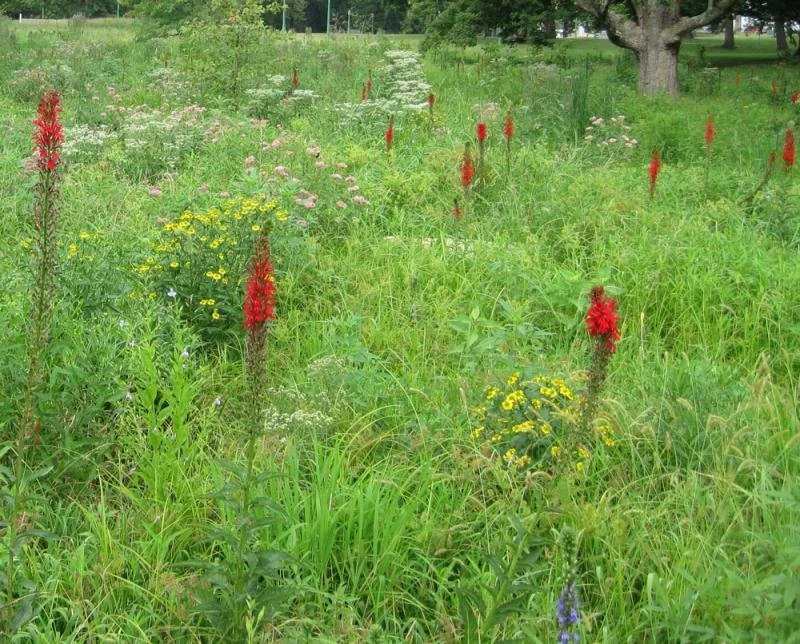
Prairie Restoration Options
(6 acre site)
Prairie restoration is a multi-year process that requires patience and consistent care, typically taking around three years to fully flourish. The first year focuses on preparing the site, often with a fall seeding that allows native species to establish naturally over winter. During the following one to two years, active management is essential—this includes regular mowing to suppress fast-growing weeds and targeted spot spraying to control invasive species. While progress may seem slow at first, these early efforts lay the groundwork for a resilient, diverse prairie ecosystem that will thrive in the years ahead. For those who prefer to avoid herbicide use and instead work with the existing seed bed, planting native plant plugs in the first year is a viable alternative approach but will involve longer year after year maintenance.
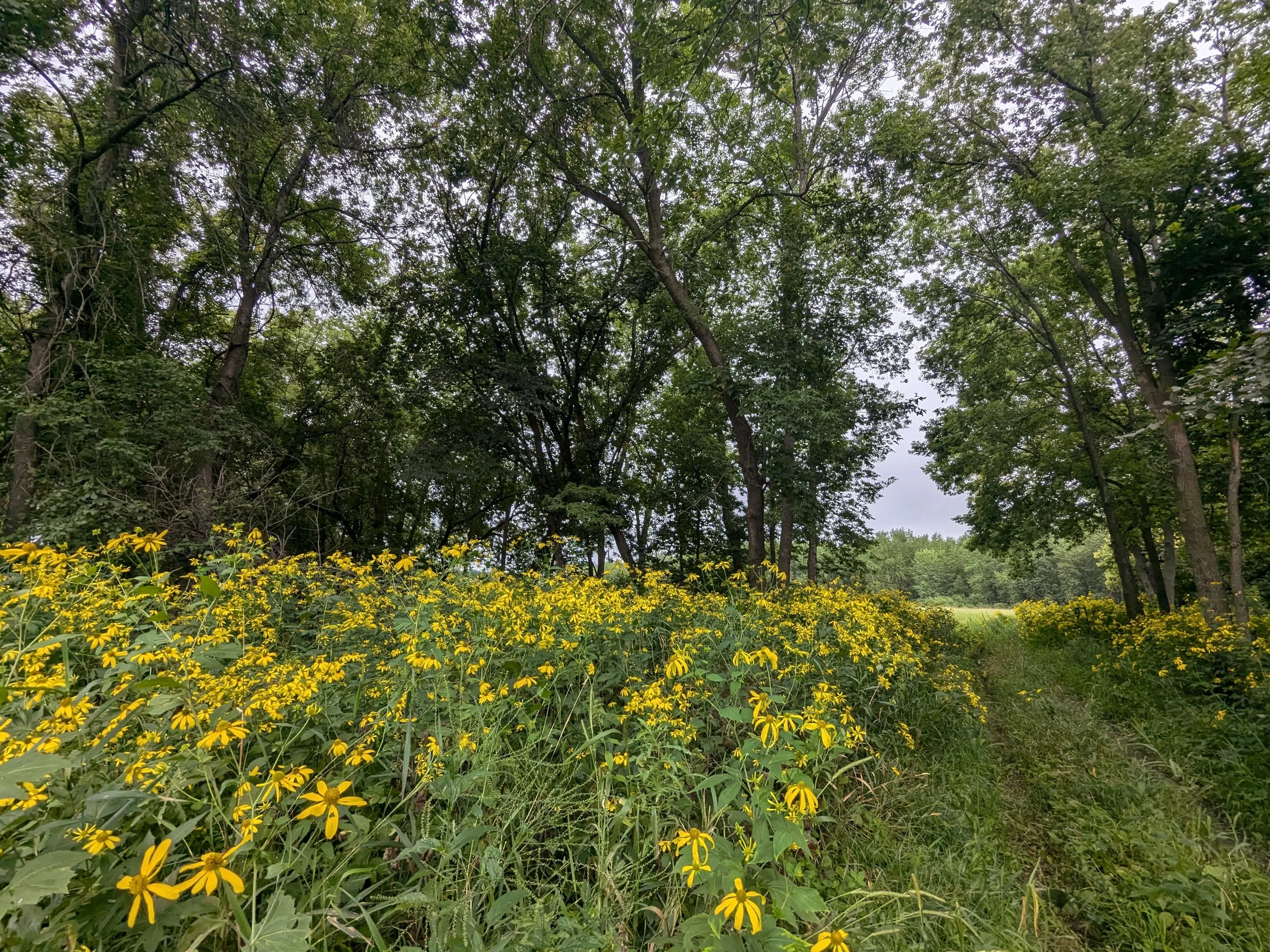
Option 1: Traditional Prairie Restoration (Standard Method – Glyphosate Use)
This is the most widely used and proven method for establishing a native prairie efficiently and successfully. The process begins with three herbicide applications (typically glyphosate) throughout the growing season—early, mid, and late summer—to eliminate the existing weed seed bank and competing vegetation. While some landowners prefer to avoid herbicides, even many experienced and environmentally focused prairie restoration professionals recommend this method because it provides the cleanest slate for native species to establish.
After site preparation, a diverse native seed mix is broadcast in the late fall (dormant seeding). During years 2 and 3, routine maintenance is critical—this includes mowing multiple times each growing season and spot-spraying invasive weeds as needed. Although it can be tempting to let early wildflower growth flourish, mowing before weeds go to seed is essential to prevent them from outcompeting slower-establishing native plants. By year 3, the prairie typically begins to fully establish and flourish.
Best for: Fastest establishment, highest long-term success rate, lower long-term maintenance challenges.
Estimate Cost: $3,700 per acre. Includes site prep (broadcast spraying 3 times, drag and harrow soil for seed bed prep) seed installation. (Standard Economy Seed Prairie Mix- can upgrade to pollinator or diversity mix if desired)
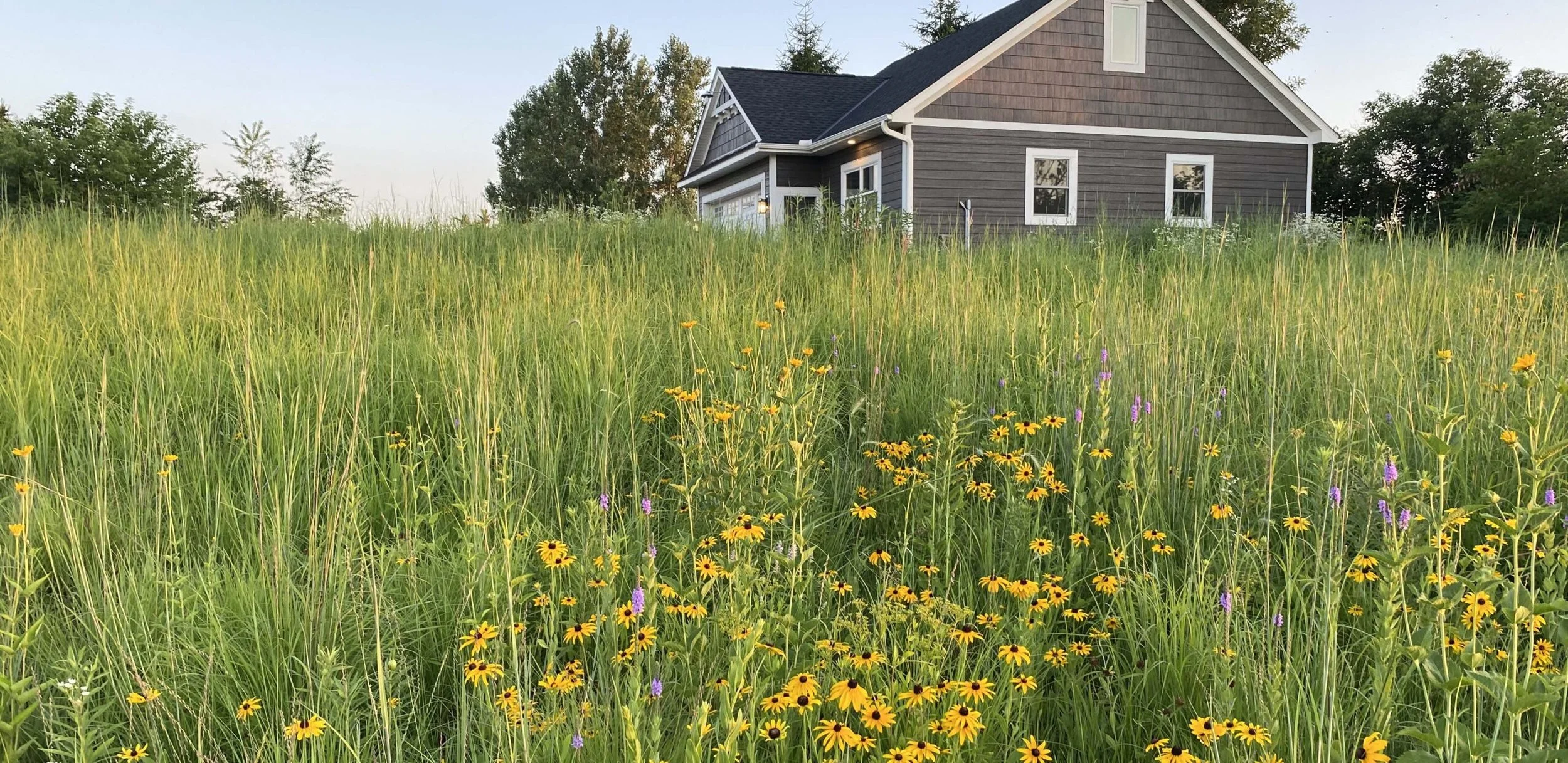
Option 2: Organic Herbicide Prairie Restoration
This method follows the same general timeline and structure as the traditional approach but uses a certified organic herbicide instead of conventional glyphosate. The site is still treated three times over the growing season to suppress existing vegetation, followed by a late fall native seed installation.
In years 2 and 3, mowing remains essential, along with spot treatment using organic herbicides to manage invasive species. While this approach aligns better with organic principles, it is typically more expensive and less effective at fully eliminating aggressive weeds, which can lead to increased competition during establishment.
Best for: Projects prioritizing organic practices while still aiming for a full prairie conversion.
Estimated Cost: $4,900 per acre. Includes site prep (broadcast spraying with organic herbicide- 3 times, drag and harrow soil for seed bed prep) seed installation. (Standard Economy Seed Prairie Mix- can upgrade to pollinator or diversity mix if desired)
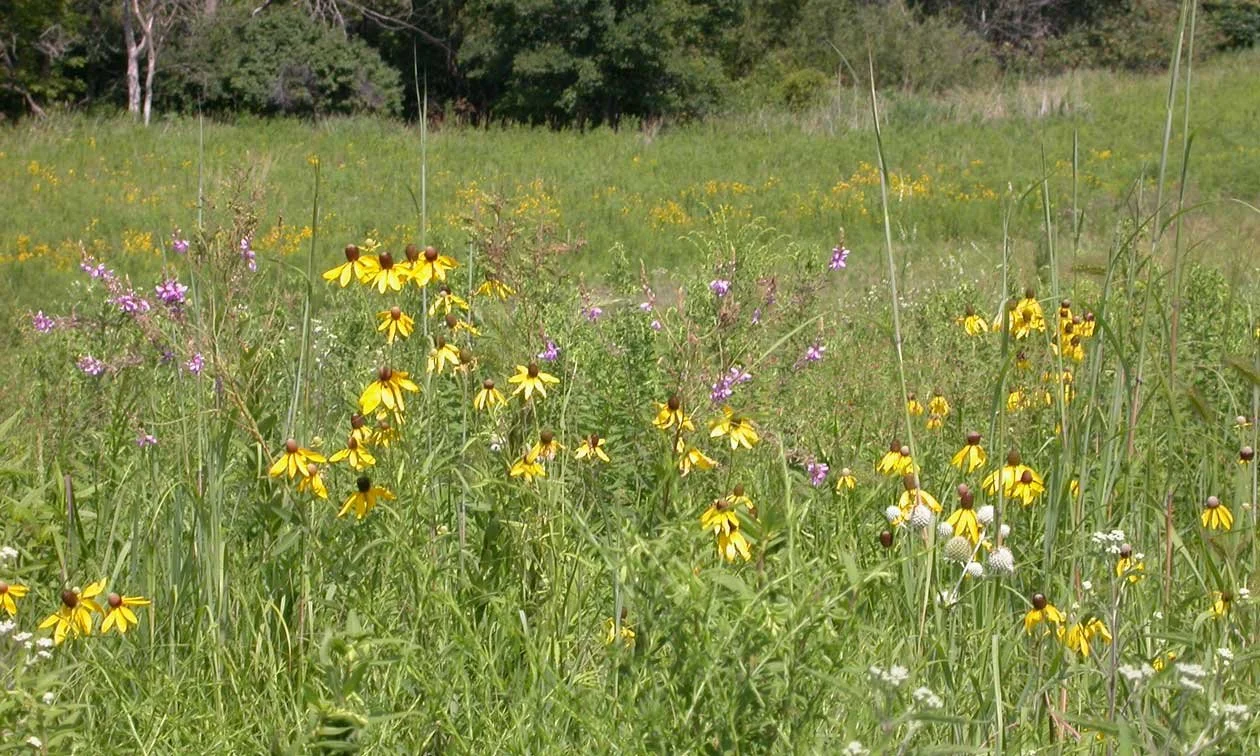
Option 3: No-Herbicide Enhancement (Plug Planting into Existing Vegetation)
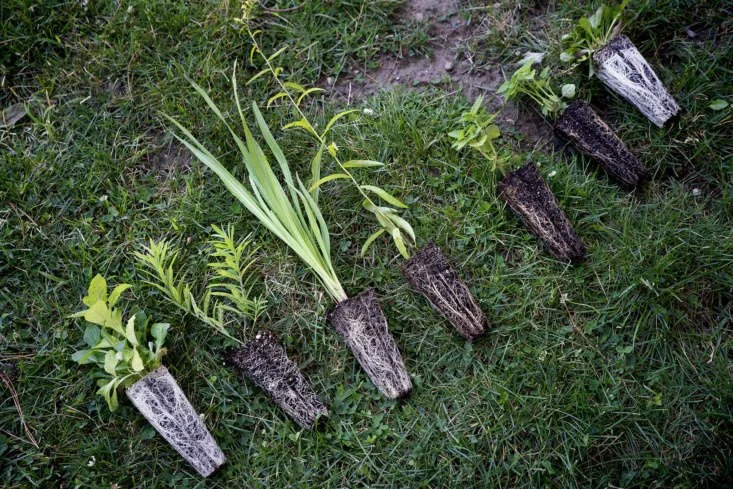
For those wanting to avoid all herbicide use—including organic options—this method works with the existing vegetation rather than replacing it entirely. Because native prairie seed struggles to establish in an already dense seed bed, this approach relies on installing native plant plugs instead.
Using tools like a sod cutter, small sections of existing vegetation are removed, and native plugs are planted directly into the openings. Over time, these native clusters expand and create pockets of prairie species throughout the site. While this method will not result in a full prairie conversion, it can significantly enhance biodiversity and visual appeal by adding native flowers and structure.
12 groups of plants per acre. 100, plants per group.
Best for: Zero herbicide use, gradual ecological improvement, and adding color and habitat diversity without full site disturbance.
Estimated Cost: Per 1,200 native plant plugs/ acre=$5,820 per acre.
Option 4: Hybrid Approach (Seeding + Native Plant Plugs for Faster Results)
This option builds on either Option 1 or Option 2 by adding 1,000–2,000 native plant plugs after the fall seeding. While seeded prairies can take a few years to show strong wildflower presence, adding plugs accelerates visual impact and biodiversity.
The plugs establish more quickly than seed, providing noticeable blooms and structure as early as year 2. This helps bridge the gap between initial establishment and full prairie maturity, while also increasing species diversity and resilience.
Best for: Landowners who want the long-term success of seeding combined with quicker visual results and enhanced ecological diversity.
Estimated Cost: Add-on to Option 1 or 2 above. $4.85 per plant plug. (Cost of plant plug plus labor to install). 500 plant plugs per acre= $2,325 per acre